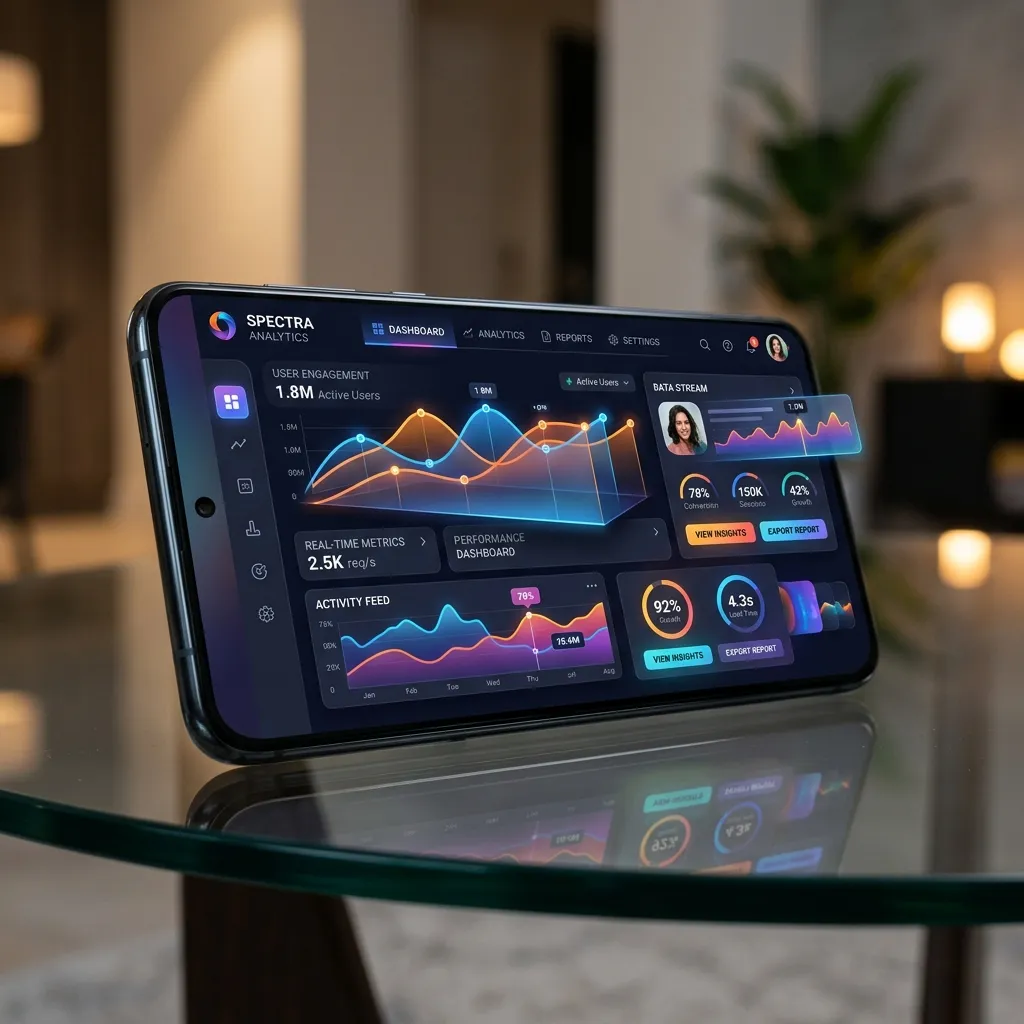
In the highly competitive era of mobile accessibility, user engagement hangs by a microscopic thread. A three-second delay in load time can skyrocket bounce rates, and the friction of forcing users to visit an app store to download a heavy native application is often an insurmountable conversion killer. Enter the solution dominating 2026: **Progressive Web Apps (PWAs)**.
As pioneers in the web app development space, Bizmindnexus has consistently witnessed brands radically transform their user retention metrics by migrating from sluggish legacy portals to dynamic PWAs. But what exactly makes these applications so disruptive?
The Anatomy of an App-Like Browser Experience
At its core, a Progressive Web App is a standard web application built using HTML, CSS, and modern JavaScript frameworks (like React, Vue, or Angular). However, through the integration of cutting-edge browser APIs—most notably "Service Workers"—it achieves the superpower of mimicking a native iOS or Android app perfectly.
This creates frictionless, app-like browser experiences. Users navigate instantly without page reloads, UI transitions are buttery smooth (hitting 60 frames per second), and the aesthetic feels exactly like native software. The cognitive load on the user drops significantly; they simply visit a URL and are immediately immersed in a premium digital environment without ever touching the Apple App Store or Google Play.
Offline Reliability: Conquering Network Instability
Perhaps the most profound capability of a PWA is its independence from a stable internet connection. Historically, if a user lost their Wi-Fi or 5G signal, a web page would crash to the dreaded "You are offline" dinosaur screen.
PWAs eliminate this frustration. Service workers act as intelligent proxies sitting between the browser and the network. They selectively cache essential HTML assets, styling instructions, and critical API data straight to the user’s device storage upon their first visit.
- The "Lie-Fi" Solution: When a user enters an elevator or a subway, the app doesn't hang indefinitely trying to load. It instantly serves the cached version.
- Background Sync: If a user inputs data—such as sending a chat message or completing a purchase form—while completely offline, the PWA securely holds that action in a background queue. The moment connectivity is restored, the service worker silently syncs the data to your servers.
This level of resilience guarantees that your scalable business web apps are always functionally active, safeguarding sales and operational efficiency no matter the user's location.
Installation Without the Friction (Add to Home Screen)
One of the largest hurdles for digital marketers is convincing a user to install an app. It involves navigating away from the current task, opening an app store, searching, waiting for a massive 150MB download, granting permissions, and finally opening it.
PWAs bypass this funnel entirely. Through the Web App Manifest, users receive a non-intrusive prompt asking if they’d like to "Add to Home Screen." With a single tap, an icon instantly appears on their smartphone drawer or desktop taskbar. The "installation" takes milliseconds and occupies a fraction of the storage space (often under 1MB). When launched from the home screen, the PWA operates in standalone mode—eliminating the browser URL bar and cementing the illusion of a native app.
Re-Engagement Through Push Notifications
A dormant user is a lost user. The golden goose of mobile marketing has always been the ability to send push notifications. Historically locked behind the walled gardens of native apps, Push API protocols now allow PWAs to securely transmit push notifications directly to a user’s lock screen, even when the browser is completely closed.
For custom e-commerce solutions, this means instant alerts for abandoned carts or flash sales. For SaaS dashboard platforms, this means critical server alerts or real-time project updates delivered immediately without requiring the user to keep a tab open. It is a monumental leap in proactive user engagement.
Unparalleled SEO Benefits and Discoverability
A native app locked in an app store cannot be crawled by search engines. Content within it is invisible to Google. A Progressive Web App, however, lives dynamically on the open web. Every screen, product, and article within your PWA possesses a unique URL that search engine bots can spider, render, and rank.
When engineering scalable business web apps, you must factor in organic acquisition. A PWA acts precisely like a high-performance, lightning-fast website when visited by the Googlebot. The combination of flawless Core Web Vitals (due to aggressive service worker caching), mobile-first responsiveness, and deep-linking capabilities creates a scenario where your web app dominates the SERPs (Search Engine Results Pages), acting as its own primary marketing vessel.
Cost-Efficiency: Write Once, Deploy Everywhere
From a corporate financing standpoint, managing native applications is notoriously expensive. An enterprise typically has to maintain a web team, an entirely separate iOS (Swift) engineering team, and an Android (Kotlin) development team. This triples the QA testing phase, fractures the product roadmap, and drastically inflates maintenance costs.
A PWA unified this fragmented workflow. You write the codebase once. It deploys simultaneously across desktop browsers, iPads, Androids, and iPhones. This consolidated web app development approach slashes the initial CapEx and continually trims ongoing OpEx, allowing enterprises to redirect those budgets toward marketing and core product innovation.
Conclusion: The Web's Inevitable Conclusion
In 2026, forcing your demographic to jump through the convoluted hoops of an app store is becoming a hallmark of outdated business logic. The modern user demands immediacy, speed, and privacy. The Progressive Web App delivers on all three fronts dynamically.
Whether you are launching a complex B2B workflow portal, a rapid-fire media publication, or an interactive retail storefront, adopting PWA architecture is the definitive step toward future-proofing your business. Bridging the performance of native with the universal reach of the open web, Bizmindnexus engineers PWAs that do more than just function—they captivate.